


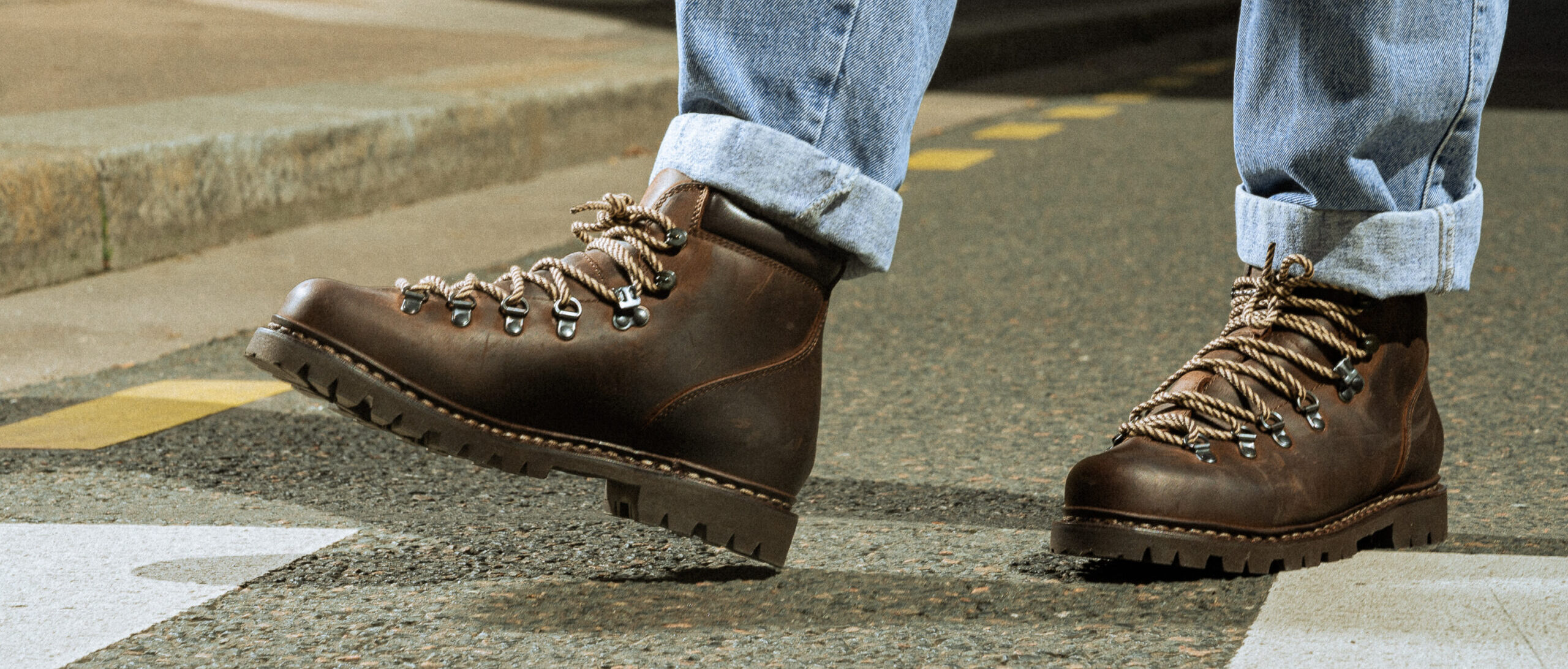
Most men approach boot purchasing as a one-time decision — finding a pair that works and wearing it across every season until replacement becomes unavoidable. For casual footwear in moderate climates, this approach is adequate. For men whose boots are a genuine working tool — worn across extended shifts, demanding outdoor environments, and the full range of seasonal conditions that a year of serious use involves — it consistently produces a mismatch between boot and conditions that compromises both performance and boot longevity. Men pull on boots are available across a wider range of seasonal specifications than most buyers realize — insulation levels, waterproofing systems, outsole compounds, and upper constructions that are purpose-built for specific weather conditions rather than designed as universal compromises. Understanding how to select pull on boots matched to each season’s specific demands — and how to care for them through the conditions those seasons impose — produces boots that perform correctly year-round and last significantly longer than boots pushed beyond their design parameters.
This is the seasonal guide to men’s pull on boots that most purchasing decisions never account for.
Spring: Transition Season Demands and What They Require
Spring is the most underestimated season for boot selection — its variable conditions, unpredictable precipitation, and the combination of cold mornings and warm afternoons create a demand profile that neither winter nor summer boots address well.
The primary spring challenges for pull on boots:
Mud and soft ground are the defining spring surface conditions across agricultural, construction, and outdoor use environments. Pull on boots for spring use require outsoles with aggressive lug patterns designed for soft surface grip — widely spaced lugs that shed mud rather than packing it, maintaining traction across the wet, soft surfaces that spring conditions consistently produce. Outsoles with tightly packed lug patterns that perform well on hard surfaces become mud-packed and effectively smooth within minutes of soft ground exposure — a performance failure that outsole selection at purchase prevents.
Wet conditions without the extreme cold of winter shift the waterproofing calculus away from insulated waterproof boots toward non-insulated waterproof construction — providing full moisture exclusion without the heat retention that insulated winter boots generate during the higher-output activity that spring temperatures support. Men who wore insulated waterproof pull on boots through winter should transition to non-insulated waterproof construction for spring — maintaining the moisture protection that spring precipitation requires without the overheating that insulation causes when temperatures rise above freezing.
Spring care priorities:
Spring mud is among the most damaging contaminants for pull on boot construction — it penetrates welt seams, packs into lug patterns, and retains moisture against leather surfaces for extended periods if not removed promptly. Cleaning pull on boots after every use in muddy conditions — brushing dried mud from the upper and outsole before it can work into the construction — prevents the cumulative damage that spring conditions impose on neglected boots. Waterproofing treatment reapplication at the beginning of spring — before the wet season’s demands are at their peak — ensures that the boot’s moisture protection is at maximum effectiveness when it is most needed.
Summer: Heat, Dust, and UV Demands
Summer presents an opposite set of challenges to spring and winter — heat management, dust and abrasive particle exposure, UV degradation of leather finishes, and the drying effect of sustained heat on leather construction are the primary summer concerns for pull on boot wearers.
The primary summer challenges for pull on boots:
Heat management is the central summer concern for men wearing pull on boots across extended shifts or outdoor use. Pull on boots without breathable upper construction — full leather uppers without perforation or mesh panels — retain heat and moisture inside the boot at levels that cause significant discomfort and accelerate interior degradation during summer use. Summer pull on boots should prioritize breathable upper construction — leather-mesh hybrid uppers or perforated leather — that allows air circulation without sacrificing the structural protection that full synthetic uppers eliminate.
Lightweight construction becomes more relevant in summer than in any other season — the fatigue-amplifying effect of boot weight is most pronounced in hot conditions where the body is already managing thermal stress. Men who wear heavier insulated or heavily constructed pull on boots through winter and spring should evaluate whether a lightweight summer-specific pull on boot — built with synthetic uppers and modern EVA midsoles — reduces end-of-day fatigue meaningfully enough to justify a seasonal boot rotation.
UV exposure degrades leather finishes and dries leather construction faster than any other environmental factor — pull on boots used in direct sunlight during summer require more frequent conditioning than boots used in shaded or indoor environments. The drying effect of sustained heat and UV exposure depletes the natural oils in leather construction at an accelerated rate that standard maintenance intervals do not account for.
Summer care priorities:
Conditioning frequency should increase during summer — monthly conditioning rather than the quarterly schedule adequate for milder conditions — to address the accelerated oil depletion that heat and UV exposure cause. Interior hygiene becomes more important in summer as increased perspiration creates the moisture and bacterial environment that odor and interior lining degradation develop from — removing insoles after every shift and allowing the boot interior to dry completely before the next wearing prevents the accumulation of interior damage that summer use without attention to interior hygiene consistently produces.
Autumn: Preparation Season and What It Requires
Autumn is the preparation season for boot maintenance — the window during which the accumulated damage of summer use should be addressed and boots prepared for the more demanding conditions of winter before those conditions arrive and make remediation more difficult.
The primary autumn challenges for pull on boots:
Autumn conditions combine elements of both spring and winter — wet conditions from increased precipitation, cold temperatures that begin stressing leather construction, and the leaf litter and forest debris that outdoor and agricultural use environments generate across the season. Pull on boots for autumn use should provide waterproofing without the maximum insulation level that midwinter demands — either non-insulated waterproof construction for men who run warm or lightly insulated waterproof construction for those who feel cold in wet autumn conditions.
The transition from summer’s dry heat to autumn’s wet cold is particularly stressful for leather construction that has been dried and depleted by summer conditions — leather that enters autumn without adequate conditioning is more vulnerable to the cracking and stiffening that wet-cold cycling causes than leather that has been maintained through summer. Autumn is the most important conditioning window of the year — addressing summer’s accumulated depletion before winter’s wet-cold cycling demands full leather integrity.
Autumn care priorities:
A comprehensive maintenance session at the beginning of autumn — cleaning, deep conditioning, waterproofing treatment, welt inspection, and outsole evaluation — prepares pull on boots for winter’s demands from a position of maximum structural integrity. Welt inspection is particularly important at this transition point — identifying any welt deterioration or stitching damage before winter’s wet conditions stress these components further allows repair before damage progresses to the point of requiring boot replacement rather than maintenance.
Winter: Maximum Demand Season and What It Requires
Winter imposes the most demanding conditions on men’s pull on boots — cold temperatures that stiffen leather and reduce its flexibility, wet conditions from snow and ice melt that stress waterproofing systems continuously, road salt that aggressively damages leather and welt construction, and the temperature cycling between cold outdoor environments and heated indoor spaces that stresses every component of boot construction repeatedly across the season.
The primary winter challenges for pull on boots:
Insulation level matching to the specific winter conditions of the wearer’s environment is the most important winter pull on boot selection variable. Insulation is measured in grams — 200g insulation provides light warmth appropriate for active use in moderately cold conditions; 400g provides moderate warmth for mixed active and static use; 800g and above provides significant warmth for extended static or low-activity use in extreme cold. Over-insulating for the activity level — wearing 800g insulated boots during high-output active work in moderate cold — causes overheating and excessive perspiration that degrades interior construction faster than the cold itself would.
Outsole compound performance in cold temperatures is a selection variable that most buyers overlook. Standard rubber outsole compounds stiffen significantly in temperatures below freezing — reducing flexibility and grip performance at exactly the conditions where grip is most critical. Cold-rated outsole compounds — specifically formulated to maintain flexibility and grip performance at sub-zero temperatures — are worth specifying for men who work or operate outdoors in genuine winter cold rather than simply inclement autumn conditions.
Road salt resistance is the winter maintenance challenge that distinguishes men who maintain their pull on boots through winter from those who replace them annually. Salt applied to roads and walkways for ice control is highly corrosive to leather and welt construction — it draws moisture from leather fibers, degrades stitching thread, and attacks the adhesives used in direct-attach construction if allowed to accumulate. Wiping salt residue from pull on boots after every winter exposure — before it dries and concentrates on the leather surface — is the single most impactful winter maintenance practice available.
Winter care priorities:
Salt removal after every exposure, waterproofing reapplication every four to six weeks across the winter season, and correct drying at room temperature rather than near heat sources after wet exposure are the three maintenance practices that determine whether pull on boots survive winter in serviceable condition or require replacement before spring. Cedar boot trees inserted immediately after drying maintain boot shape and absorb the interior moisture that winter conditions consistently introduce — preventing the interior deterioration that moisture retention causes across a season of repeated wet exposure.
Building a Seasonal Pull On Boot Strategy
The most cost-effective approach to year-round pull on boot performance is not a single pair pushed through all four seasons but a deliberate seasonal strategy — matching boot specification to seasonal demand, maintaining boots through the conditions they are designed for, and rotating between seasonal constructions in ways that extend the working life of each pair beyond what continuous year-round use would allow.
For men whose use requirements are consistent across seasons — a single work environment with controlled conditions year-round — a single pair of well-maintained pull on boots may adequately serve all four seasons. For men whose use environments change significantly with season — outdoor work, agricultural operations, or active outdoor pursuits across variable climates — a two-boot rotation between warm-season and cold-season constructions produces significantly better seasonal performance and longer combined boot life than a single pair managed across both extremes.
The Right Boot for Every Season Your Work Demands
Seasonal conditions change. The boots that perform through them should change accordingly. BootsPlusMore carries men’s pull on boots across the full range of seasonal specifications — insulation levels, waterproofing systems, outsole compounds, and upper constructions matched to every season’s specific demands — with the selection depth to help every buyer build a boot strategy that performs correctly year-round. Explore the full collection and find the pull on boot built for the season you’re in.
