


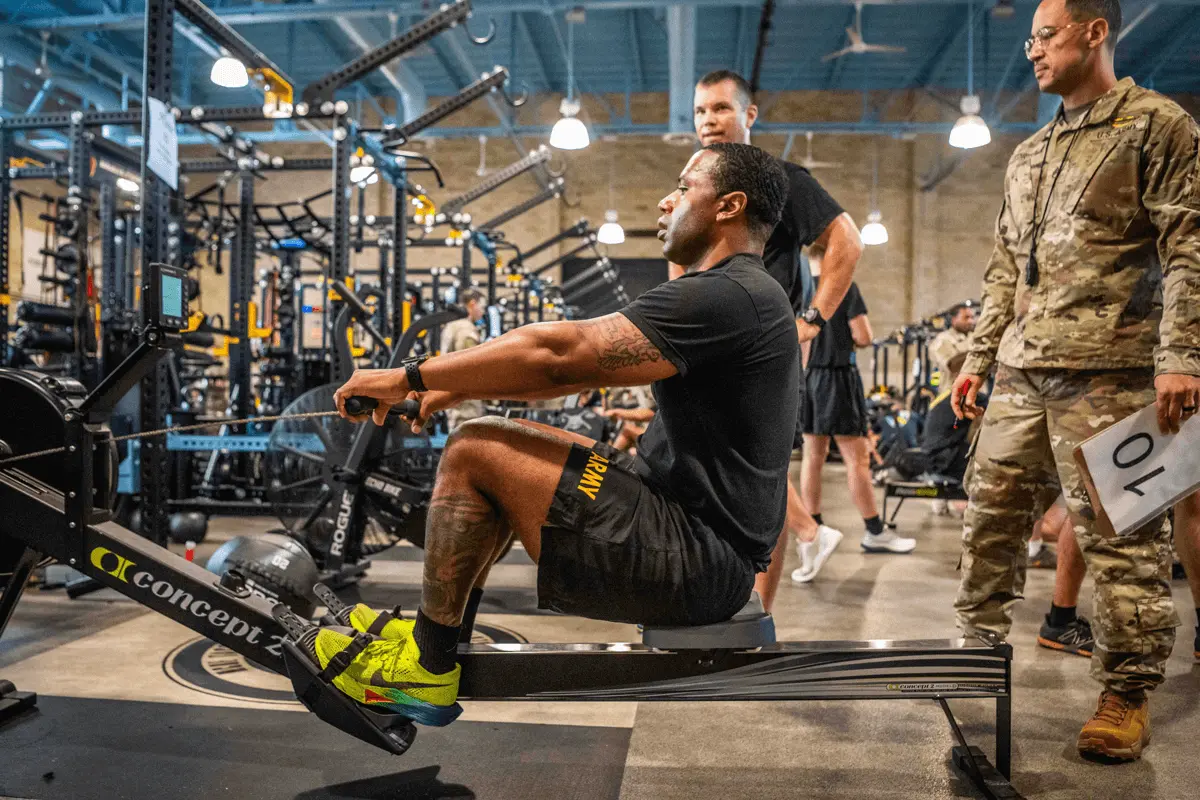
Military service places unusual physical demands on personnel. Soldiers and other service members may need to carry heavy equipment, move quickly over difficult terrain, lift and transport objects, perform repeated physical tasks, and maintain endurance during demanding operations. Because of these requirements, physical preparation is not simply about appearance or general fitness. It is closely connected to operational readiness.
Well-designed weight rooms for military personnel can provide a controlled environment where service members develop strength, muscular endurance, power, mobility, and overall physical capacity. Research into military physical readiness has consistently emphasized the importance of combining strength and endurance rather than relying on a single type of exercise.
Why Military Weight Rooms Matter
A military fitness facility has a different purpose from a conventional commercial gym. Its primary objective is to help personnel prepare for physically demanding occupational tasks. Training may need to support activities such as lifting, carrying, climbing, dragging, sprinting, changing direction, and working while wearing additional equipment.
Strength is particularly important because many military tasks involve moving external loads or controlling the body under resistance. Research has associated muscular strength, power, endurance, and body composition with several aspects of military physical performance.
A properly equipped weight room therefore becomes part of a broader physical-readiness system. It can help personnel progressively build physical reserves before training exercises, deployments, and other demanding assignments.
Essential Equipment for a Military Weight Room
The equipment selected for military facilities should support a broad range of movements rather than concentrating exclusively on bodybuilding exercises. Common equipment can include power racks, barbells, weight plates, adjustable benches, dumbbells, kettlebells, cable machines, pull-up stations, medicine balls, sleds, resistance bands, and functional-training equipment.
Cardiovascular machines such as treadmills, rowing machines, stationary bikes, and elliptical trainers can complement resistance equipment. A combination of strength and cardiovascular equipment allows personnel to develop different aspects of physical readiness within the same facility.
Functional equipment is especially useful because military personnel frequently perform movements involving lifting, carrying, pulling, pushing, and moving under resistance. High-intensity functional training has also been studied as an approach for developing several physical qualities simultaneously, including strength, power, endurance, agility, and coordination.
Designing the Space for Performance
The layout of a military weight room should prioritize safety, efficient movement, durability, and access for multiple users. Equipment should be arranged so that lifting areas, cardio stations, functional-training zones, and open movement spaces do not interfere with one another.
Strong flooring is particularly important in areas where free weights are used. Adequate ventilation, lighting, storage, clear walkways, and appropriate spacing between equipment can also make the facility safer and easier to use.
Military fitness facilities may serve large groups, so the design should allow several individuals or training teams to exercise simultaneously. Durable commercial-grade equipment can be valuable because military facilities may experience substantially heavier daily use than a typical private gym.
Training for Strength and Power
Strength training should be a central component of a military fitness program. Exercises such as squats, deadlift variations, presses, rows, loaded carries, and pulling movements can develop the ability to produce force against resistance.
Power training adds another dimension. Some military activities require force to be produced quickly rather than simply generating maximum strength. Depending on the individual’s training level and supervision available, programs may incorporate movements such as medicine-ball throws, jumps, loaded carries, and other controlled explosive exercises.
Military strength programs should be progressive rather than based on continually performing maximal efforts. Research on military physical readiness supports principles such as progressive overload, specificity, regularity, variety, and balance.
Supporting Endurance and Muscular Conditioning
A strong military fitness program cannot focus exclusively on lifting weights. Personnel also require cardiovascular endurance and the ability to sustain physical activity over time.
Weight rooms can support this broader approach by combining resistance-training areas with cardiovascular and conditioning equipment. Training sessions can be organized around the individual’s requirements, fitness level, occupational role, and current training phase.
Research examining military operations has found that endurance can decline during prolonged deployments, reinforcing the importance of maintaining appropriate physical training when operational circumstances permit.
Injury Prevention Through Proper Training
Physical training is intended to improve readiness, but poorly structured training can create unnecessary injury risk. Military personnel often experience demanding schedules, heavy workloads, limited recovery opportunities, and environmental stressors.
A well-managed weight room can contribute to injury prevention by providing controlled equipment and allowing progressive training. Proper technique, appropriate loads, adequate recovery, exercise variation, and qualified supervision are important components of a sustainable program.
Earlier Army research found that a progressive physical-readiness approach could improve or maintain fitness while reducing injury risk compared with some traditional training approaches.
The Role of Qualified Fitness Professionals
Equipment alone does not create an effective military fitness facility. Qualified strength and conditioning professionals can help personnel understand exercise technique, training progression, recovery, and individualized programming.
This is particularly important because military populations are not uniform. New recruits, experienced personnel, injured service members returning to training, and highly conditioned specialists can have very different requirements.
Recent military-focused research emphasizes individualized approaches that account for fitness level, task-specific demands, environmental conditions, and the different stresses encountered during military service.
Weight Rooms for Different Military Training Phases
Training needs can change throughout a military career. During initial training, the emphasis may be on developing a basic foundation of strength, endurance, movement quality, and physical tolerance.
Before deployment or demanding field assignments, training may become more specific to occupational requirements. During deployment, maintaining existing physical capacity can become more important because time, equipment, recovery, and facility access may be limited.
This makes flexible programming essential. Military research suggests that physical preparation should change according to the stage of training and the demands placed on personnel rather than following one identical routine throughout the year.
Deployable and Compact Training Solutions
Not every military environment has access to a large permanent gym. Field operations and deployments can create significant limitations in space and equipment.
For these situations, compact and portable training equipment can provide an alternative. Resistance bands, adjustable weights, kettlebells, suspension systems, portable racks, sandbags, and other space-efficient tools can support strength and conditioning when a traditional facility is unavailable.
Modern military physical-readiness programs have increasingly recognized the value of portable fitness resources for maintaining training capability in environments where permanent facilities may not be accessible.
Safety and Maintenance Standards
Military weight rooms require regular equipment inspection and maintenance because equipment failure can result in serious injuries. Barbells, racks, cables, benches, machines, flooring, and other frequently used items should be checked according to appropriate facility procedures.
Clear safety rules should cover equipment use, lifting practices, emergency procedures, cleanliness, and storage. Training areas should also remain free of unnecessary obstacles so users can move safely between exercises.
A facility that is clean, organized, and properly maintained encourages consistent participation while reducing avoidable hazards.
Creating a Culture of Physical Readiness
The greatest value of a military weight room extends beyond the equipment itself. A well-managed facility can contribute to a culture in which physical preparation becomes a normal part of professional readiness.
When personnel understand how strength training relates to carrying loads, moving equipment, performing occupational tasks, and maintaining physical resilience, gym training becomes more purposeful. Instead of treating exercise solely as recreational activity, service members can view it as preparation for the demands of their profession.
Conclusion
Modern weight rooms for military personnel should be designed around performance, readiness, safety, and long-term physical development. The best facilities combine resistance equipment, conditioning tools, functional-training areas, appropriate flooring, effective layouts, and knowledgeable supervision.
Military fitness requires more than simply becoming stronger. Personnel need a balanced combination of strength, power, endurance, mobility, and work capacity that reflects their occupational demands. Evidence from military physical-training research supports progressive and individualized approaches that develop these capabilities while helping manage injury risk.
Ultimately, a military weight room is most valuable when it serves a clear purpose: helping personnel build and maintain the physical capacity needed to perform demanding duties effectively, safely, and consistently.
