


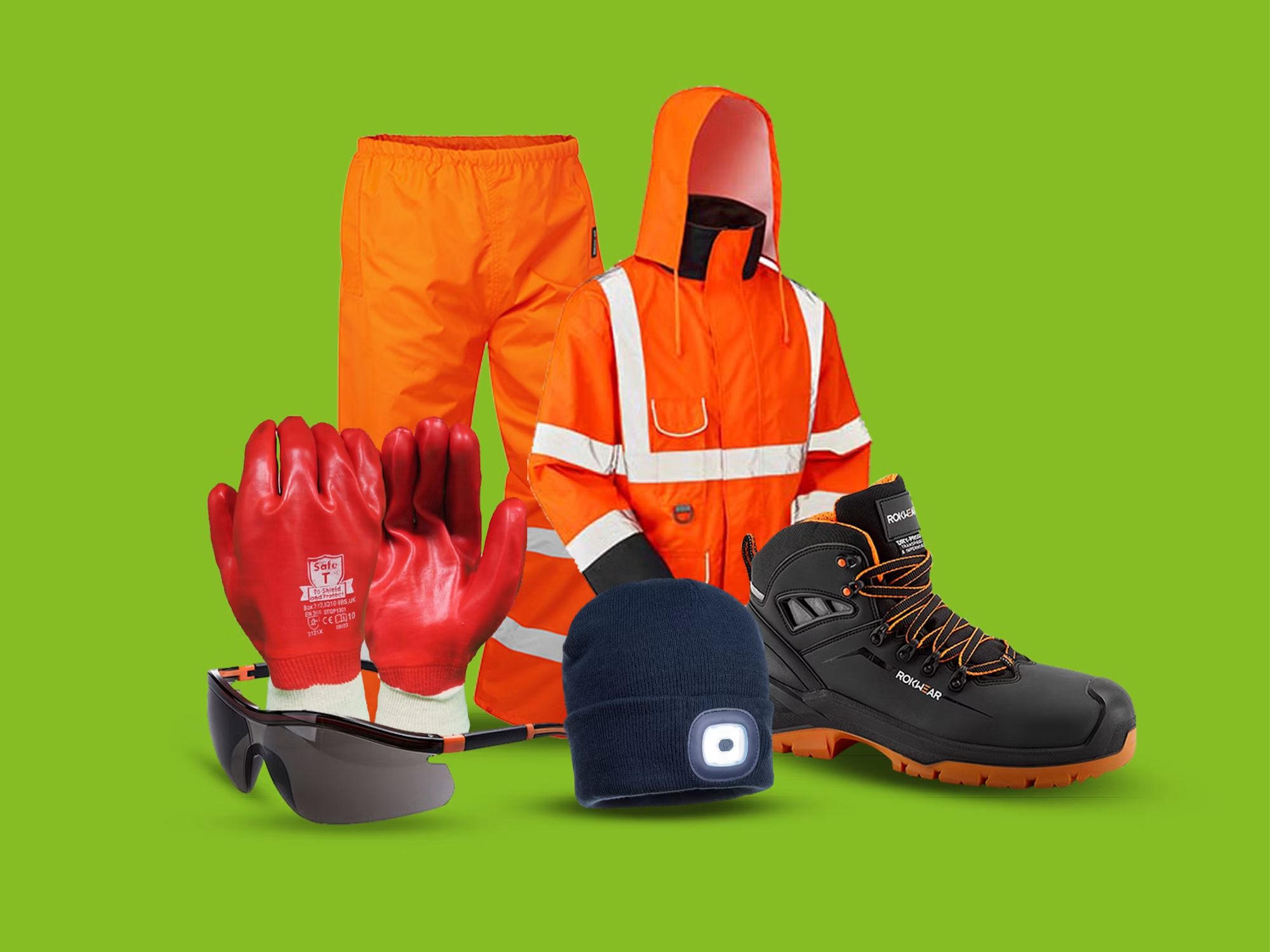
The seasonal calendar for commercial decorators, professional holiday installers, and large-venue facility managers compresses an entire year of work into a few intense months. Crews work pre-dawn parking lots stringing lights across corporate campuses, mall installations on aerial lifts during early-morning hours, and warehouse floors at peak inventory turnover where forklift traffic doubles or triples. Underneath this operational pressure sits a safety reality that does not always get the attention it deserves. Quality reflective apparel is one of the most cost-effective risk-reduction investments an installation company or seasonal operations manager can make, and yet it remains among the most underspecified pieces of crew equipment in the industry. For decision-makers responsible for crew safety, insurance exposure, and project delivery during the busiest months of the year, getting the visibility component right is worth the time it takes to think through carefully.
The Specific Hazards of Holiday and Seasonal Work
Several characteristics of seasonal commercial work amplify visibility risk in ways that everyday job sites do not.
Low-light installation windows. Most large commercial holiday installations happen before storefronts open or after they close. Crews routinely work in parking lots and on building exteriors during dusk, dawn, and full darkness. Headlight glare, store lighting at the periphery, and the broader low-contrast environment combine to make crew members harder to see than they would be on a midday job site.
Mixed pedestrian and vehicle traffic. Holiday installations often happen in active environments. Mall parking lots remain partially open. Corporate campuses have early-arriving employees. Hotel and event venue properties have constant guest movement. The mix of moving vehicles, contractors, and uninvolved third parties creates exposure scenarios that are different from controlled construction sites.
Aerial and elevated work. Bucket trucks, scissor lifts, and roof access for rooftop displays put crew members at heights where ground-level operators may not see them clearly. Visibility from below matters as much as visibility at ground level when spotting and signaling are part of the workflow.
Warehouse and logistics traffic. For seasonal facility managers running peak inventory cycles, warehouse floor traffic intensifies dramatically. Forklift operators working extended shifts, third-party drivers unfamiliar with the facility, and elevated picking activity all combine to raise the visibility stakes for floor staff.
Outdoor weather conditions. Late fall and winter installation windows bring rain, snow, fog, and the early dark of standard time. Each of these factors degrades visibility independently and compounds when combined.
Why Reflective Apparel Specifically Matters
Reflective apparel works on a fundamentally different principle than standard clothing or even bright-colored garments. Retroreflective material returns incoming light directly back to its source, meaning that headlights, work lights, and forklift lamps illuminate the wearer in a way that ordinary fabric cannot match. This effect is what makes a reflective vest or jacket visible at hundreds of feet in conditions where a colored shirt is barely distinguishable at twenty.
For seasonal crews, this difference translates directly into reaction time for drivers and equipment operators. The earlier a worker is seen, the more time the operator has to slow, stop, or steer clear. In environments where vehicles are moving and workers are exposed, reflective material is not optional gear. It is the primary visibility tool that separates a safe operation from a serious incident.
What to Specify Across a Crew
For installation companies and facility managers building out a seasonal apparel program, several considerations matter beyond simply checking the high-visibility box.
ANSI class appropriate to the environment. ANSI/ISEA 107 establishes performance classes for high-visibility apparel. Class 2 and Class 3 garments have different reflective area and background material requirements, and the right class depends on the speed of nearby traffic and the complexity of the work environment.
Garment style fit to the work. A vest works for some applications but is inadequate for others. Long-sleeve shirts, jackets, and hooded options offer expanded coverage for cold-weather work, while fitted designs reduce the snag and entanglement risk of looser garments around moving equipment.
Cold-weather layering. Late-season installation work often requires insulated outerwear. Reflective parkas, bomber jackets, and bib overalls maintain visibility while providing weather protection that a thin vest layered over a sweatshirt cannot match.
Durability and laundering specifications. Crews working long days in dirt, sap, paint, and outdoor conditions need garments that hold up to repeated washing without losing reflective performance. Quality manufacturers specify wash cycles their products are rated for.
Branding and identification. For installation companies running multiple crews and subcontractors, branded reflective apparel doubles as crew identification and helps property managers and security distinguish authorized workers from unauthorized site presence.
Sourcing for the Season
Building out a reflective apparel program before peak season starts is significantly easier than scrambling for inventory once the schedule is full. Establishing a relationship with a supplier who carries multiple reflective apparel brands across the relevant ANSI classes, sizing, and garment styles lets installation managers and operations leads source consistently and replenish quickly. National Safety Gear carries a comprehensive range of reflective apparel suited to commercial holiday installation, large-venue event management, and seasonal warehouse operations, supporting buyers who need to outfit teams ahead of compressed delivery windows. For operations managers, the goal is straightforward. Equip the crew, document the program, and walk into the busiest months of the year confident that visibility is one variable that has already been handled.
