


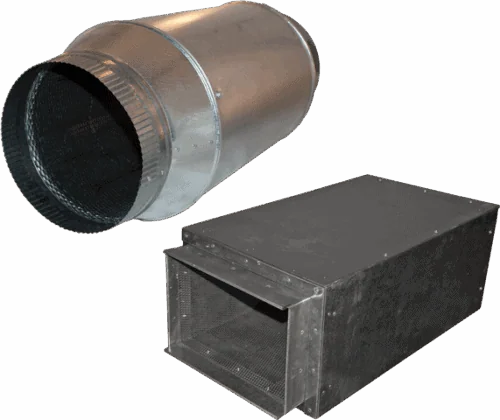
Mechanical systems do not need to be completely silent, but persistent fan, airflow, and vibration noise can disturb bedrooms, offices, meeting rooms, and other occupied spaces. Properly selected Air Duct Mufflers can absorb sound traveling through ductwork while allowing air to continue moving through the ventilation system. Before installation, contractors should identify the noise source and confirm that the muffler suits the duct size, airflow needs, and building requirements.
Where Does Duct Noise Come From?
Noise inside a duct system can originate from several sources. Fans and air-handling equipment produce mechanical sound that may travel along the duct and emerge through supply or return grilles. Air passing through fittings, dampers, transitions, and narrow sections can also create turbulence.
Metal ductwork may carry vibration from motors or nearby equipment. If ducts are poorly supported, they can rattle against framing or other building materials. Sudden pressure changes may cause sheet metal to flex or produce popping sounds when the system starts and stops.
Common noise sources include:
- Supply and exhaust fans
- Air handlers and blower motors
- High air velocity inside undersized ducts
- Sharp elbows or abrupt duct transitions
- Loose fittings and unsupported duct sections
- Partly closed dampers or blocked grilles
- Mechanical vibration passing into ductwork
- Debris or damaged components inside the system
Finding the source is an important first step because a sound muffler is intended to absorb duct-borne noise. It cannot correct every mechanical or airflow problem.
How Does an In-Line Duct Muffler Work?
An in-line duct muffler is installed as part of a duct run. Air passes through its central opening, while acoustic material within the surrounding structure absorbs some of the sound energy traveling along the duct.
The device acts on noise carried by the airstream, including sounds associated with air movement, fans, and mechanical vibration. Its position in the duct allows it to address sound before it reaches a grille or travels into another occupied area.
A suitable muffler should maintain the required air passage through the duct. Contractors should review the product’s design and technical information to understand how it may affect resistance, available pressure, and system performance.
What Problems Should Be Repaired First?
A muffler should not be used to hide a failing fan motor, loose blower wheel, damaged bearing, or other equipment defect. Grinding, scraping, or sudden changes in operating sound require mechanical inspection.
Excessive airflow noise may also indicate a system-design concern. When too much air is forced through a small duct or grille, the resulting velocity can create whistling and rushing sounds. Correcting the duct size, balancing the system, or adjusting fan performance may be necessary.
Loose connections should be tightened, and ducts should be properly supported. Flexible connectors or vibration isolators may help where equipment vibration transfers directly into rigid ductwork.
Once these issues have been addressed, a duct muffler can provide another layer of sound control for noise that normally travels through the ventilation path.
Where Should a Duct Muffler Be Installed?
Placement depends on the source of the noise and the room requiring protection. A muffler may be installed downstream from a fan to reduce sound traveling toward occupied areas. In other cases, it may be positioned before a grille or near a section of duct shared by two rooms.
The selected location should provide enough straight duct for a secure connection. It should also remain accessible for inspection, even if the product does not require routine internal maintenance.
Contractors should avoid locations where the unit could be exposed to water, physical damage, or unsuitable temperatures. Installation must follow product instructions as well as applicable mechanical, fire, and building codes.
Match the Muffler to the Duct System
Duct diameter is one of the main selection factors. A muffler designed for 10-inch round ductwork, for example, should be connected to a compatible 10-inch duct system unless an approved transition and supporting design are provided.
Poorly planned transitions can create turbulence and add noise close to the very component intended to control it. Maintaining a straight and properly sealed airflow path helps reduce this risk.
Before ordering, verify:
- Duct shape and inside diameter
- Available installation length
- Direction and volume of airflow
- Expected static pressure
- Type and frequency of the noise
- Required acoustic and fire ratings
- Access for installation and inspection
- Compatibility with adjoining duct materials
Builders should include these details during design whenever possible. Planning the muffler location before ceilings and wall finishes are installed can reduce labor and avoid awkward connections.
Consider Materials and Code Requirements
Any component installed in an air-distribution system must be suitable for that use. Acoustic liners and other internal materials should carry the required ratings for the intended building and application.
Commercial projects may have different requirements from single-family homes. Contractors should consult project specifications, the authority having jurisdiction, and the manufacturer’s documentation before installation.
Fire safety, smoke development, material classification, joint sealing, and duct support may all affect product acceptance. Code suitability should never be assumed based only on the general appearance of a component.
Evaluate Results as Part of the Whole System
Sound control works best when the entire system is considered. Fan selection, air velocity, duct layout, isolation, equipment condition, grille design, and building construction all influence what occupants hear.
After installation, the system should be operated through its normal range. Contractors can listen for remaining vibration, rattling, whistling, and equipment noise at nearby grilles and occupied spaces. If noise persists, further investigation may identify a second transmission path through walls, framing, or equipment supports.
For projects involving 10-inch ductwork and unwanted ventilation noise, review the available in-line sound-control option from Suncourts. Visit the website to examine its specifications and determine whether it fits the duct layout, code requirements, and sound-control goals of your next project.
