


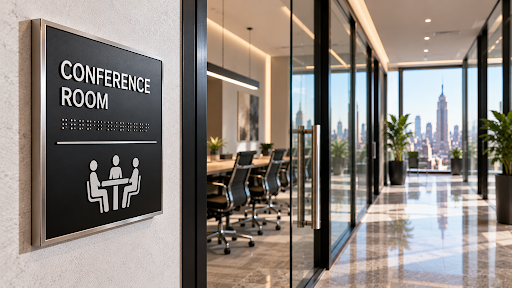
Accessible signage helps customers, employees and visitors navigate a building with greater confidence. For New York City businesses, it also plays an important role in meeting accessibility requirements. From identifying restrooms in a Manhattan office to directing customers through a Brooklyn retail store, signs must communicate clearly and accommodate people with different needs.
Understanding which signs require tactile lettering, Braille or specific placement can help you plan your premises more effectively. Whether you are opening a new business, renovating an existing property or updating your interiors, knowing the basics can help you avoid costly changes later.
What Are The ADA Signage Requirements?
The Americans with Disabilities Act (ADA) sets accessibility standards for many public-facing businesses and facilities in the United States. Its 2010 Standards for Accessible Design explain which signs must meet specific accessibility requirements.
Not every sign needs the same features. Requirements depend on the sign’s purpose, location and the type of information it provides. For example, a permanent restroom identification sign has different requirements from a promotional poster in a shop window.
The main categories to consider include:
- Permanent Room Identification: Signs identifying permanent rooms, such as toilets, meeting rooms and offices, generally require raised characters and Braille.
- Directional Signs: Signs guiding visitors towards facilities or accessible routes must meet applicable visual readability requirements.
- Accessible Parking Signs: Designated accessible parking spaces must have the required identification signs, subject to specific exceptions.
- Accessible Entrances: Where not all entrances are accessible, signs must identify accessible entrances and direct visitors towards them where required.
These requirements are outlined in Sections 216 and 703 of the 2010 ADA Standards.
Key Design Features To Check
The design of an accessible sign affects how easily people can read or identify it. You should consider the following features when planning signs for your premises.
Raised Characters And Braille
Permanent room identification signs generally need raised characters and Grade 2 Braille. The raised text must use uppercase letters in a simple, non-decorative font.
For example, a sign identifying a medical consultation room should allow a visitor with visual impairment to identify the room by touch. Braille must appear below the corresponding text.
Contrast And Readability
Signs should be easy to read under different lighting conditions. The ADA Signage requires visual characters to contrast with their background and have a non-glare finish.
For a New York restaurant, this could mean using light lettering on a dark background rather than placing glossy text over a reflective surface. Decorative fonts may suit your brand identity but should not compromise legibility.
Placement And Height
Tactile signs must be installed at specific heights and locations. Under the ADA Standards, tactile characters generally need to be positioned between 48 and 60 inches above the finished floor, measured at the prescribed points.
Signs identifying rooms should also be placed beside the door, usually on the latch side. You must allow sufficient clear floor space so that a person can approach and read the sign without entering the door’s swing.
These details are particularly important in compact New York City offices, where furniture, narrow corridors and door layouts can affect sign placement.
How Requirements Apply To Different Businesses
The type of premises you operate will influence which signs you need and where they should go.
| Business Type | Signage Considerations |
| Retail Stores | Identify accessible entrances, permanent rooms and relevant facilities. Keep directional information easy to follow. |
| Offices | Provide appropriate identification for meeting rooms, toilets and other permanent spaces. Consider visitor routes and shared facilities. |
| Restaurants And Cafés | Check restroom identification, accessible routes and signs for relevant customer facilities. |
| Hotels | Review guest-room identification, accessible facilities and signs directing guests through public areas. |
| Healthcare Facilities | Ensure room identification and directional signs help patients and visitors locate services. |
| Schools And Colleges | Review classroom identification, accessible routes and signs in shared public areas. |
The exact requirements depend on the building, the facilities provided and the applicable accessibility provisions. A sign schedule prepared during the design stage can help you identify what is needed before fabrication begins.
What New York City Businesses Should Check
Federal accessibility requirements are not the only consideration when installing signs in New York City. Local building codes, zoning rules and other applicable regulations may also affect your project.
The NYC Department of Buildings explains that signs are subject to city construction codes, zoning regulations and other rules. Non-compliance may result in violations and fines.
Before installing new signs, check:
- Building Requirements: Confirm whether your project involves alterations that may trigger additional accessibility or building-code requirements.
- Storefront Sign Rules: Review local restrictions that may apply to exterior signs, including their location and installation.
- Existing Conditions: Assess whether current signs remain suitable after a renovation, change of use or change in room layout.
- Professional Review: Consult an accessibility specialist or qualified design professional when the requirements are unclear.
For a business operating across several New York locations, a consistent sign plan can also help maintain accessibility standards across different premises.
How To Plan An Accessible Signage Project
A practical signage project begins with understanding how people use your building. Walk through the premises from the perspective of a first-time visitor and identify where people may need room identification or directions.
Prepare a list of permanent rooms, accessible entrances and relevant facilities. Then review each sign’s wording, tactile features, contrast and proposed location before approving production.
Working with an experienced signage provider can help you coordinate the design, fabrication and installation stages. Velement, a signage and visual communication company with architectural signage experience, can support businesses with physical-space signage planning.
However, the final design should be checked against the requirements that apply to your specific property. A visually consistent sign system is useful only when it also communicates clearly and meets relevant accessibility standards.
Conclusion
Accessible signs help people identify rooms, navigate facilities and use business premises with greater independence. For New York City businesses, planning should account for tactile lettering, Braille, contrast, placement and applicable local rules.
Review your signs before installation or renovation, and seek qualified guidance where requirements are uncertain. A clear, coordinated sign system can support both accessibility and everyday building use.
Frequently Asked Questions
- Do All Business Signs Need Braille?
No. Braille is generally required for signs identifying permanent rooms and spaces, but not every sign. Promotional signs, directories and certain other categories have different requirements or exceptions.
- Where Should Tactile Signs Be Installed?
They are generally placed beside the door, on the latch side, with tactile characters positioned between 48 and 60 inches above the finished floor. Specific placement rules and exceptions may apply.
- Are Exterior Business Signs Covered By The ADA?
Some exterior signs are covered, while others are exempt. Requirements depend on their purpose and location. Signs identifying accessible entrances or accessible parking spaces may have specific requirements.
- Do New York City Businesses Need To Follow Local Sign Rules?
Yes. Businesses must consider applicable city construction codes, zoning regulations and other requirements in addition to federal accessibility standards.
- Should Businesses Review Existing Signs During Renovations?
Yes. Renovations, changes in room use or alterations to entrances can affect accessibility. Reviewing existing signs early can help identify updates needed before the project is completed.
