


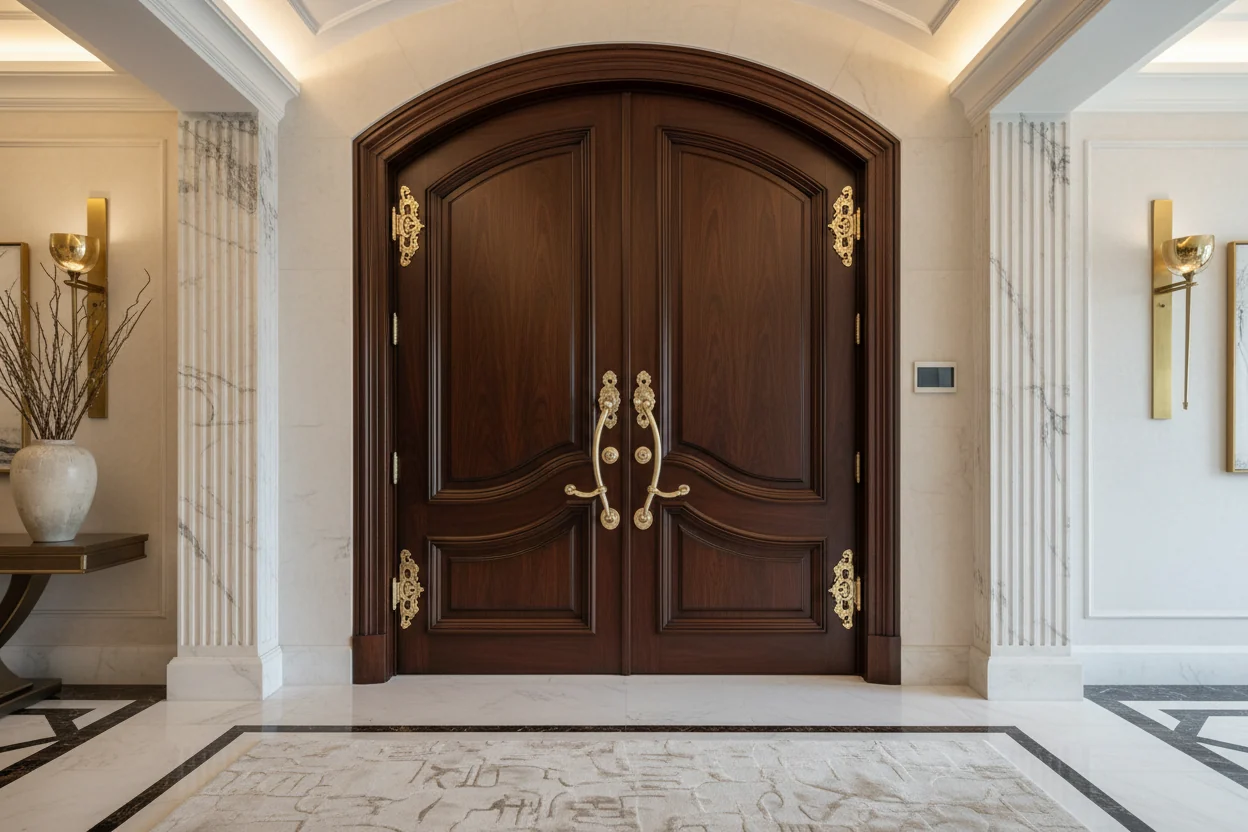
Choosing interior doors can seem like a relatively small part of a renovation, but doors influence the appearance, privacy, acoustics, durability, and overall feel of a home. Premium options can cost considerably more than basic hollow-core or budget doors, which naturally raises an important question: Are European interior doors worth the higher cost?
The answer depends on what you expect from your doors. European-made interior doors are often associated with refined finishes, solid construction, better hardware, modern designs, and improved sound control. However, paying more does not automatically mean getting better value. The construction, materials, installation, and intended use all matter.
What Makes European Interior Doors Different?
European interior doors are generally designed with a strong emphasis on construction quality, clean styling, precise manufacturing, and functional performance. Depending on the manufacturer and product range, they may use engineered wood, MDF, HDF, solid timber components, veneers, laminates, or more specialized cores.
One important difference is the construction inside the door. Basic hollow-core doors are lightweight and economical, while denser constructions can provide greater resistance to everyday wear and better sound reduction. The internal core can therefore be just as important as the visible finish.
The Quality of Materials Can Justify the Price
One of the strongest arguments for spending more on a premium door is material quality. European manufacturers may offer doors using carefully engineered wood products or solid and veneered timber, depending on the design.
MDF and HDF are particularly useful for achieving smooth, consistent finishes. Engineered materials can also provide greater consistency than natural timber because they are manufactured to controlled specifications.
However, buyers should not assume that every European door uses superior materials. The actual specification matters more than the country of manufacture. Always examine the core, surface, edge construction, frame, hinges, and finish before making a decision.
Better Sound Reduction
Sound control is one area where a higher-quality interior door can make a noticeable difference.
A lightweight hollow-core door does little to prevent sound from moving between rooms. A denser door construction can provide substantially better acoustic separation. This can be particularly useful for bedrooms, home offices, children’s rooms, media rooms, and other spaces where privacy matters.
If you work from home, for example, upgrading the door to your office may provide more practical value than installing premium doors throughout the entire house.
Design Is Another Major Advantage
European interior doors are often chosen because of their clean, contemporary appearance. Flush doors, minimalist panels, concealed frames, sophisticated veneers, glass combinations, and understated hardware can create a more coordinated architectural appearance.
For modern interiors, the door can become part of the overall design rather than simply an opening between two rooms.
This is especially valuable when homeowners are trying to create a consistent appearance throughout a property. A well-designed door can complement flooring, wall finishes, furniture, cabinetry, and architectural details.
Premium Hardware Makes a Difference
A high-quality door needs appropriate hardware to perform properly. Hinges, handles, locks, latches, and frames all influence how a door feels and operates.
A premium door fitted with poor-quality hardware may not deliver the experience the buyer expects. Conversely, a well-constructed door combined with durable hinges and accurately installed hardware can feel smoother and more substantial every time it is used.
This is why comparing only the price of the door leaf can be misleading. The complete door system should be considered.
Durability and Everyday Use
Interior doors can experience thousands of opening and closing cycles over their lifetime. Doors in kitchens, hallways, children’s rooms, and frequently used bathrooms can receive particularly heavy use.
A stronger construction can be worthwhile where doors are exposed to frequent impact and handling. Denser door structures generally offer better resistance to everyday wear than very lightweight alternatives.
That does not mean an inexpensive door will necessarily fail quickly. A basic door can perform perfectly well in a low-traffic room. The important point is to match the construction to the demands of the space.
Are European Interior Doors More Expensive to Install?
The purchase price is only part of the total cost. Premium doors can involve more expensive frames, specialized hardware, transportation, and installation requirements.
Installation quality is particularly important. Even an excellent door can perform poorly if the frame is incorrectly positioned, hinges are poorly adjusted, or gaps are inconsistent. Proper installation helps the door close correctly and ensures that its appearance and functional characteristics are maintained.
For this reason, homeowners should obtain a complete quotation that includes the door, frame, hardware, finishing requirements, delivery, and installation rather than comparing door prices alone.
Where Premium Doors Are Most Worth the Investment
You do not necessarily need premium doors everywhere. Strategic upgrading can offer better value.
Consider investing more in:
- Master bedrooms
- Home offices
- Living rooms
- Media rooms
- Frequently used hallways
- Children’s bedrooms
- Rooms where privacy is important
- Main areas where visitors are likely to notice the design
For storage rooms, utility spaces, wardrobes, or other low-traffic areas, a simpler door may be perfectly adequate.
When Cheaper Interior Doors May Be the Better Choice
There are situations where spending more simply does not make financial sense.
If you are renovating a property on a strict budget, inexpensive doors can help control overall project costs. They may also be appropriate for rooms where acoustic performance, premium appearance, or exceptional durability is not important.
For example, installing an expensive designer door on a small storage cupboard may provide very little practical benefit.
The smartest approach is not necessarily to choose the most expensive door. It is to spend money where the improvement will actually be noticeable.
Consider the Long-Term Value
Price should be evaluated over the expected life of the product rather than only at the time of purchase.
A premium door may provide better appearance, greater durability, improved sound control, and a more satisfying user experience. If it remains attractive and functional for many years, the initial price difference can become easier to justify.
At the same time, buyers should avoid assuming that a higher price automatically guarantees a longer lifespan. Door construction and installation quality are more meaningful indicators of performance than branding alone.
How to Compare European Interior Doors Properly
Before purchasing, ask for specific information about the complete door system.
Important questions include:
What Is the Core?
Find out whether the door is hollow, honeycomb-filled, tubular chipboard, solid chipboard, MDF/HDF-based, engineered timber, or another construction. Core density can have a significant effect on weight, durability, and sound performance.
What Is the Surface Finish?
Check whether the door uses natural veneer, laminate, paint, lacquer, or another finish. Consider how the surface will handle cleaning, fingerprints, scratches, and everyday use.
What Hardware Is Included?
Ask about hinges, handles, locks, latches, and adjustment options. Hardware quality should be considered part of the door specification.
Is the Frame Included?
Some prices cover only the door leaf. Others include a complete frame and hardware package. Make sure you are comparing equivalent products.
What Are the Acoustic Specifications?
If sound reduction is important, look for tested acoustic performance rather than relying on general marketing descriptions. The complete installation can influence the final result.
Are European Interior Doors Worth the Higher Cost?
For many homeowners, European interior doors can be worth the additional cost, particularly when design, durability, acoustic performance, and high-quality construction are priorities.
However, they are not automatically the best choice for every room or every budget. A premium door is most valuable when its superior construction and design solve a genuine need.
The best strategy is to prioritize the rooms where quality matters most and choose doors according to their actual specifications. A carefully selected premium door in a bedroom or home office may deliver considerably more value than replacing every door in the house with the most expensive option available.
Final Thoughts
European interior doors should be viewed as a long-term design and performance investment rather than simply an expensive decorative feature. Their potential advantages include stronger construction, attractive finishes, better sound control, refined hardware, and sophisticated styling.
Ultimately, European interior doors are worth the higher cost when you value quality and intend to benefit from those features for many years. If your priority is simply filling an opening at the lowest possible price, a basic interior door may be the more sensible choice.
The key is to compare construction, materials, hardware, performance, installation, and overall value—not just the price tag.
