


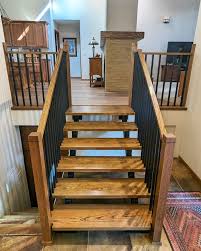
Why Red Oak Remains a Trusted Material for Residential Staircases
A residential staircase must handle repeated foot traffic while contributing to the overall character of the home. Contractors and designers therefore need a material that balances appearance, availability, workability, and dependable performance. For renovations and new construction, red oak stair treads remain a practical choice, particularly in properties that already feature red oak flooring, trim, cabinetry, or architectural woodwork.
Recognizable Grain and Warm Color
Red oak is known for its visible grain and warm natural coloring. Individual boards may range from light tan and pinkish beige to medium brown. This variation gives the finished staircase character without making the surface appear overly busy.
Its open grain is more pronounced than the grain of many other domestic hardwoods. That characteristic can help stairs become a noticeable design feature, especially when the treads are paired with painted risers, traditional railings, or contrasting balusters.
The natural warmth of red oak works well in traditional and transitional homes. Depending on the selected stain and surrounding finishes, it can also suit contemporary spaces that use natural materials and simple architectural lines.
Suitable for Frequently Used Stairs
Stairs experience wear differently from ordinary flooring. People repeatedly step on the same central areas, placing concentrated pressure on each tread. The surface must also withstand shoes, pet claws, dirt, and occasional impacts from household objects.
Red oak is a hard domestic wood that performs well in residential applications when the stair system is properly built and maintained. Its noticeable grain can make minor wear less apparent than it might be on a very smooth or lightly figured wood.
The wood species alone does not determine how long a staircase will last. Proper installation, a suitable protective finish, regular cleaning, and control of indoor moisture levels are also important.
Broad Range of Stain Options
One reason red oak remains widely used is its ability to accept many stain colors. It can be finished in natural and honey tones that preserve its warmth, or stained in medium and dark browns for a more formal appearance.
Gray and muted brown finishes are also possible, but the wood’s natural pink or red undertones should be considered. A sample can help designers and property owners understand how a selected stain will interact with the grain and base color.
Trade professionals should avoid approving a finish based solely on a digital image. Screen settings, room lighting, wall colors, and nearby materials can all affect how a stain appears. Physical samples viewed at the property provide a more dependable basis for selection.
Coordinating Treads With Existing Flooring
Red oak has been used in American homes for decades, so it is frequently present in renovation projects. When an existing red oak floor runs beside or below a staircase, choosing the same wood species can create a more connected appearance.
However, using the same species does not guarantee an exact color match. Existing floors may have darkened, faded, or changed in tone over time. Older finish products may also differ from those currently available.
Contractors should compare the new tread sample with the existing floor under both natural and artificial light. In some cases, a complementary finish may produce a better result than attempting a near match that still shows a visible difference.
Important details to compare include:
- Natural wood color and variation
- Grain pattern
- Stain undertone
- Finish sheen
- Age and condition of the existing floor
- Riser and skirt-board colors
- Handrail and newel-post finishes
These comparisons are especially important in open floor plans where the staircase and flooring can be viewed together.
Prefinished Versus Unfinished Treads
Project conditions often determine whether prefinished or unfinished treads are more suitable. Unfinished treads allow staining and coating to take place after installation. This can be useful when a custom stain must be mixed to coordinate with an existing floor.
On-site finishing, however, requires sanding, cleaning, staining, drying, and applying protective coats. These stages can extend the project schedule and may produce dust or odors inside an occupied property.
Prefinished red oak treads arrive with the stain and protective surface already applied. They reduce the finishing work required at the jobsite and can help installers complete staircase projects within a more predictable timeframe.
Factory-applied finishes may also provide greater consistency across the order. Installers must still handle the components carefully and protect finished surfaces from scratches, adhesive, tools, and construction traffic.
Measuring and Ordering Requirements
Accurate measurements are essential before placing an order. Contractors should measure every step because widths and depths can vary, particularly in older homes or site-built staircases.
The installer should also determine whether the project calls for full replacement treads or retrofit components installed over an existing stair structure. Adding material over an existing tread can affect riser height, tread depth, nosing projection, and compliance with local construction requirements.
Ordering details may include tread thickness, width, depth, nosing shape, finish, return configuration, and quantity. A tread with one exposed side may require a left or right return, while an open staircase may require returns on both ends.
Caring for a Red Oak Staircase
Routine maintenance can preserve the appearance of red oak stairs. Loose dirt and grit should be removed regularly because these particles can act like abrasives under shoes. Spills should be wiped promptly, and only cleaning products approved for the applied finish should be used.
Excess water, harsh chemicals, and abrasive pads may damage the surface coating. During construction or later remodeling, suitable protective coverings can help prevent scratches and dents.
Red oak offers familiar beauty, dependable residential performance, and compatibility with many flooring and interior styles. Flooring dealers, contractors, installers, builders, architects, and designers can visit Wood Stair Co to explore red oak components and select suitable materials for an upcoming staircase project.
