


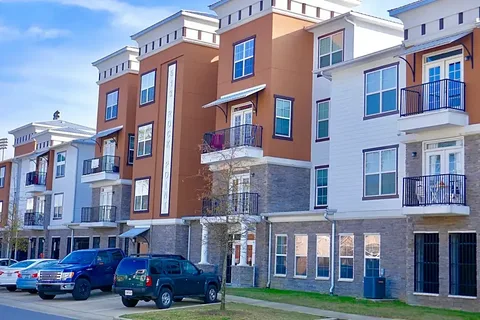
If you’re budgeting for a year at the University of Alabama, rent is usually the single biggest line item outside of tuition — and it’s also the one with the widest range. Depending on the complex, the floor plan, and how close you want to be to campus, monthly costs for Tuscaloosa apartments can swing by several hundred dollars for what looks, on paper, like a similar unit. This guide walks through what actually drives those price differences and how to build a realistic housing budget before you start touring properties.
Why Prices Vary So Much
Three factors explain most of the price spread you’ll see across listings:
Distance from campus. Walkable, Strip-adjacent properties command a premium simply because students will pay extra to avoid driving or relying on the campus shuttle. Move two or three miles out toward McFarland Boulevard and you’ll often find more square footage for less money — but you’re trading convenience for space.
Age and amenities. Newer construction with resort-style pools, private bathrooms in every bedroom, and on-site gyms costs more to build and more to rent. Older complexes, even ones with a great location, are usually priced lower because they haven’t been renovated in years.
Lease structure. Properties that bill by the bedroom (common in newer student-specific developments) price each room individually, which can make per-person costs easier to predict. Traditional unit-based leases split the total rent among roommates, which means your actual cost depends heavily on who you’re splitting with.
Building a Realistic Monthly Budget
Rent itself is rarely the full picture. When comparing Tuscaloosa apartments, build your budget around these categories:
- Base rent — the advertised monthly price
- Utilities — water, electric, gas, and trash; some properties cap these and bill overages
- Internet — sometimes included, sometimes a separate $40-60/month charge
- Parking — reserved spots can run an extra $25-75/month at popular complexes
- Renter’s insurance — often required by the lease, typically $10-20/month
- Pet fees — a one-time deposit plus monthly pet rent if applicable, often $200-400 upfront and $20-35/month after
A unit advertised at $700/month can easily land closer to $850-900/month once these are factored in. Always ask for an itemized fee sheet before signing, not just the headline rent figure.
Roommates Change the Math Significantly
Splitting a four-bedroom house with three friends will almost always beat the per-bedroom rate at a purpose-built student complex, but it comes with tradeoffs: older houses near campus often have higher utility bills due to poor insulation, and you’re taking on more responsibility for lawn care, pest control, and general upkeep that a managed complex would otherwise handle. If you’re price-sensitive, it’s worth pricing out both a shared house and a bedroom in a managed complex before deciding which tradeoff makes more sense for your year.
Timing Can Save You Real Money
Some complexes offer reduced rates or waived deposits for early signers during the fall leasing season (typically October through December for the following August). Waiting until summer to find Tuscaloosa apartments often means choosing from whatever inventory is left, which is rarely the best-priced inventory. If budget is your top priority, starting your search early gives you access to pre-lease specials that disappear once a property nears full occupancy.
Don’t Overlook the Cost of a Long Commute
A cheaper apartment further from campus can end up costing more than it appears once you account for gas, parking permits, and the time value of a longer commute — especially if you have back-to-back classes or evening labs. If you’ll need a car regardless, factor in realistic monthly fuel and a campus parking pass (which has its own annual fee) before assuming the further-out option is automatically the better deal.
A Few Hidden Costs Worth Asking About
- Furniture packages. Some complexes offer furnished units for an extra monthly fee rather than building it into base rent — make sure you know which you’re being quoted.
- Application and admin fees. These are usually non-refundable and can run $50-100 per applicant, which adds up fast for a group of four roommates.
- Move-out cleaning fees. Ask whether this is itemized separately from your security deposit, since some properties charge it regardless of how clean the unit is left.
- Lease guarantor requirements. Many properties require parents to co-sign, and some charge an additional guarantor processing fee.
Putting It All Together
The cheapest-looking listing isn’t always the cheapest option once fees, utilities, and commute costs are factored in — and the most expensive-looking listing sometimes turns out to be a better value once everything is bundled in. The only way to compare accurately is to ask every property for a full, itemized cost breakdown rather than relying on the advertised base rent alone.
Before signing anywhere, it’s worth comparing real, up-to-date pricing across multiple Tuscaloosa apartments side by side, including the fees that don’t always show up in the marketing copy. A little extra research upfront can mean the difference between staying on budget for the year and getting hit with costs you didn’t plan for.
If you’re still narrowing down your options, browsing current listings and resident feedback for Tuscaloosa apartments is a good next step before scheduling tours.
Quick Answers to Common Budget Questions
Is it cheaper to live with three roommates or sign a single-bedroom lease?
Almost always, splitting a larger unit among more roommates lowers your individual cost — but only if everyone pays reliably. A joint-liability lease means you could be on the hook for a roommate’s missed payment, so factor that risk into your decision, not just the math.
Do prices drop closer to move-in if units are still available?
Sometimes, but it’s not a reliable strategy. Leftover inventory in July or August is often leftover for a reason — less desirable floor plans, worse parking, or units that didn’t lease during the priority window. Any savings can be offset by ending up with a less ideal unit.
Are utility caps worth worrying about?
Yes, especially during Alabama summers when air conditioning use spikes. Ask what the cap actually is in dollars or kilowatt-hours, not just whether one exists, and ask current residents whether they’ve ever gone over it.
Should I get renter’s insurance even if it’s not required?
Yes. Even at $10-15 a month, it’s inexpensive protection against theft, fire, or water damage to your belongings, and many landlords require proof of coverage before move-in regardless.
