


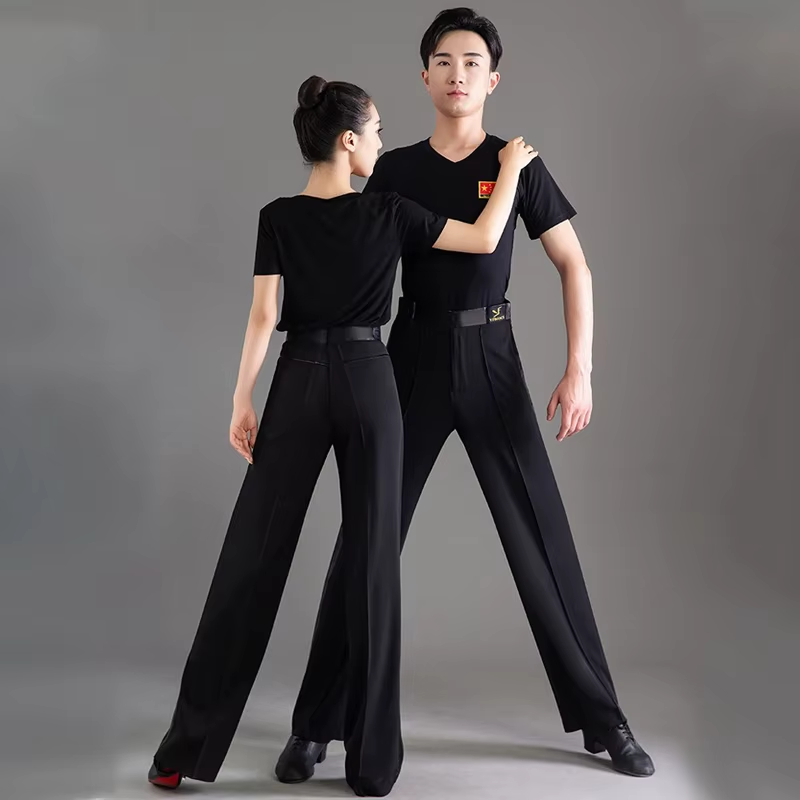
Walk into any rehearsal, dance convention, or competition warm-up area and you will see the same garment doing more work than any other piece of dancewear in the room. Quality dance track pants have quietly become the most important off-the-floor staple for serious movers, bridging the gap between technical practice attire and the hours dancers spend warming up, cooling down, traveling between classes, and conditioning their bodies. They are no longer the loose, generic warm-ups of decades past. The current generation is engineered specifically for the way dancers move, with cuts, fabrics, and construction details that reflect what choreographers, athletic trainers, and competitive dancers actually need.
Why Dancers Need Purpose-Built Track Pants
Dance is not the same as general athletic activity, and the gear that serves a runner or a gym-goer often falls short in a studio environment. Dancers need pants that allow extreme range of motion through the hips and knees, that breathe through long technique classes, that layer easily over tights or shorts during warm-up, and that move quietly enough not to interfere with musicality and rhythm work.
Generic athletic track pants were designed around steady-state movement patterns. Dance demands sudden direction changes, deep lunges, full extensions, floor work, and periods of stillness. A pant that bunches at the knee during a tendu, restricts the hip during développé, or makes noise during adagio is not just an inconvenience. It actively interferes with the work.
The Construction Details That Matter
Several specific design elements separate studio-quality dance track pants from generic athletic wear.
Gusseted construction at the inseam allows full range of motion through the hips without straining the seam. This single detail is often the difference between a pant that lasts through a competition season and one that splits during a center floor combination.
Tapered or fitted ankles keep fabric from bunching around the foot during turns and prevent the visual line of the leg from being broken by excess material. A clean ankle line matters both for instructor feedback during class and for the dancer’s own awareness of their lines.
Mid to high rise waistbands stay in place during inversions, leaps, and floor work without digging into the abdomen or exposing the lower back. Dancers spend significant time in positions where a low-rise pant simply does not stay where it belongs.
Lightweight, breathable fabrics with a soft hand keep the body warm enough during pauses without overheating during active sequences. The weight needs to be carefully calibrated, heavy enough to layer effectively, light enough to move without resistance.
How Different Dancers Use Them
The way a contemporary dancer uses track pants differs from how a competitive jazz dancer or a hip hop artist incorporates them, and the best designs account for this range.
For ballet and contemporary dancers, track pants serve primarily as warm-up and cooldown wear, layered over leotards and tights to keep muscles warm before and after intensive work. The fit needs to be easy enough to pull on and off quickly between exercises.
For jazz, lyrical, and competition dancers, track pants often double as informal performance wear during conventions, master classes, and social moments at competitions. Style matters as much as function in these contexts.
For hip hop and commercial dancers, track pants are frequently part of the actual class attire and sometimes the performance look itself, requiring pants that can move through floor work and isolations while still reading visually on stage or camera.
For studio coaches and instructors, track pants serve as professional teaching attire that allows demonstration of choreography across styles without the limitations of street clothing.
What Sets Tiger Friday Apart in This Category
Among dancewear brands building specifically for this segment, Tiger Friday has developed a strong reputation among studio owners, competition coaches, and serious young dancers for producing track pants engineered around the realities of training. The brand’s design approach emphasizes movement testing with actual dancers, fabrics chosen for their behavior under stage lighting and through long studio days, and silhouettes that flatter without restricting the technical work.
The result is product that holds up not just in the showroom but across the genuine wear cycle of a competitive dance season, multiple weekly classes, regional and national competitions, conventions, summer intensives, and the inevitable everyday wear that comes with garments dancers love.
Choosing the Right Pair
Before investing in dance track pants, consider how you will actually use them. A pair worn primarily for warm-up and travel can prioritize comfort and ease. A pair intended for class wear should prioritize range of motion and a clean line. A pair meant to serve double duty as performance or convention wear should prioritize style and visual presentation alongside function.
Fit testing matters. Try the pants in the positions you actually move through, deep second position, attitude derrière, floor work, traveling jumps. The pants should support the work, not fight it.
For dancers, coaches, and studio owners shopping with intention, the right track pants are not an afterthought purchase. They are part of the toolkit that supports the daily work of training, performing, and refining technique. The best pair is the one you reach for first, the one that disappears the moment you start moving, leaving nothing between you and the choreography.
