


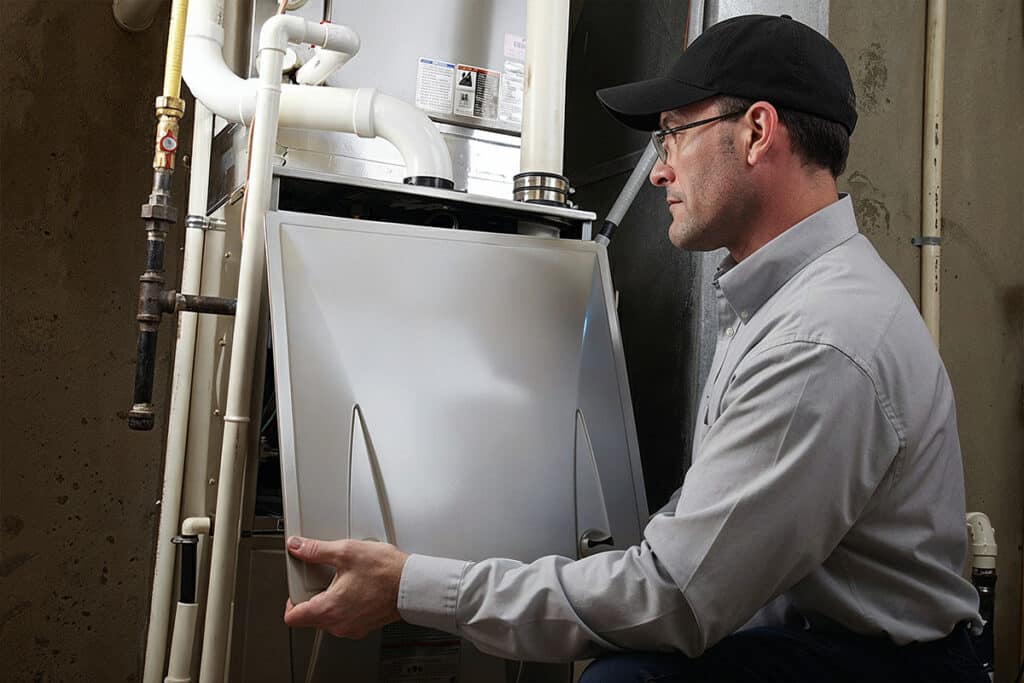
A furnace can often show signs of trouble before it stops working completely. Paying attention to unusual sounds, inconsistent heating, strange odors, or repeated cycling can help homeowners address smaller problems before they become major breakdowns. Furnace manufacturers and HVAC guidance commonly identify restricted airflow, ignition problems, mechanical failures, and combustion issues as causes of common furnace symptoms.
Contents
ToggleFor homeowners, recognizing these warning signs early can make it easier to decide when basic troubleshooting is appropriate and when professional service is necessary. Below are seven signs that your furnace may need attention.
1. Your Furnace Is Not Producing Enough Heat
One of the clearest warning signs is a furnace that runs but does not adequately heat your home. You may notice that the thermostat is set correctly, yet rooms remain chilly or the air coming from the vents feels lukewarm.
Several problems can cause inadequate heating, including a dirty filter, restricted airflow, thermostat problems, ignition issues, or malfunctioning furnace components. A clogged filter can restrict airflow and may contribute to overheating and safety shutdowns.
Start by checking that the thermostat is set to heating mode and that supply and return vents are open. If those basic checks do not solve the problem, professional diagnosis may be appropriate.
2. The Furnace Turns On and Off Repeatedly
Frequent starting and stopping is commonly known as short cycling. Instead of completing normal heating cycles, the furnace repeatedly shuts down and restarts.
Restricted airflow from a dirty filter, thermostat problems, overheating, control issues, or incorrect furnace sizing can contribute to short cycling. Repeated short cycles can increase wear and leave your home with inconsistent temperatures.
If replacing an obviously dirty filter and checking unobstructed vents does not resolve the problem, arrange for an HVAC professional to inspect the system rather than repeatedly resetting it.
3. You Hear Strange or Unusual Noises
A furnace should not suddenly begin making loud or unusual sounds. New banging, rattling, squealing, grinding, or whistling can indicate a mechanical or airflow-related problem.
For example, rattling may come from loose components, while grinding or squealing can indicate worn mechanical parts. A loud bang during ignition can also require professional attention because it may be associated with delayed ignition or burner problems.
If an unfamiliar noise is persistent or unusually loud, turning the furnace off and arranging an inspection can help prevent further damage.
4. Some Rooms Stay Cold While Others Are Warm
Uneven heating is another warning sign. If one part of your Orange County home is comfortable while another remains noticeably cold, the problem may involve airflow, ductwork, the blower, the filter, or the furnace itself.
Blocked vents and restricted airflow are relatively simple things to check. However, persistent temperature differences can require a technician to evaluate the furnace and distribution system. Weak airflow from multiple vents is particularly worth investigating because it can be associated with clogged filters, blower problems, or duct restrictions.
Addressing the underlying problem can help restore more consistent comfort throughout the home.
5. Your Energy Bills Suddenly Increase
An unexpected increase in heating costs can sometimes indicate that your furnace is working less efficiently than it should. A dirty filter, restricted airflow, malfunctioning components, or other operating problems can make a heating system work harder.
A higher bill does not automatically mean the furnace is defective because utility rates, weather, thermostat settings, and household usage can also affect energy consumption. However, if higher energy use occurs together with poor heating performance or unusual furnace behavior, it is worth having the system evaluated.
Regular filter replacement and professional maintenance can help identify problems before they become more expensive.
6. You Notice Unusual Odors or Signs of Combustion Problems
Unusual smells should not automatically be dismissed. A brief dusty smell when a furnace is first operated after sitting unused can occur, but persistent burning, electrical, fuel, or combustion-related odors deserve attention.
Gas- and oil-burning furnaces can produce carbon monoxide, which is invisible and odorless. The CDC recommends furnace safety precautions and emphasizes the importance of carbon monoxide awareness.
If you smell gas, do not attempt to diagnose the gas system yourself. Leave the area and contact the appropriate gas utility or emergency service according to local safety procedures. If a carbon monoxide alarm sounds, leave the home and seek emergency assistance rather than restarting the furnace.
7. The Furnace Needs Frequent Repairs or Struggles to Start
A furnace that repeatedly fails to start, requires multiple attempts to ignite, or frequently needs service may have an underlying component problem.
Potential causes can include ignition-system failures, flame-sensor problems, control-board issues, blower problems, or other electrical and mechanical faults. These components generally require proper diagnosis rather than trial-and-error replacement.
If your furnace is older and repair problems are becoming increasingly frequent, it may also be useful to compare the expected repair costs and remaining equipment life with the cost of replacement. The decision should be based on the condition of the equipment, repair requirements, efficiency, and your household’s heating needs.
When Should You Call for Furnace Repair?
A dirty filter or blocked vent may be something a homeowner can safely check. More complicated problems involving gas, electrical components, combustion, ignition, or internal furnace components should be handled by a qualified HVAC professional.
For homeowners researching furnace repair Orange County, the most important step is not to wait until the furnace stops working completely. Early service can help identify the source of symptoms such as short cycling, inadequate heat, unusual noises, poor airflow, and repeated shutdowns.
Final Thoughts
Your furnace does not necessarily fail without warning. Changes in heating performance, operating sounds, cycling patterns, airflow, energy consumption, and odors can all provide useful clues that something needs attention.
By recognizing these seven warning signs and responding appropriately, Orange County homeowners can address potential problems earlier and maintain a more comfortable and reliable home heating system. When symptoms involve gas, combustion, electrical components, or repeated system failures, professional inspection is the safest approach.
