


Imagine a busy train station. Trains arrive and depart on multiple tracks, passengers move in different directions, and schedules must run smoothly. At the centre of this organised chaos stands the station master—ensuring that each train takes the correct route, tickets are checked, and everyone reaches their destination safely.
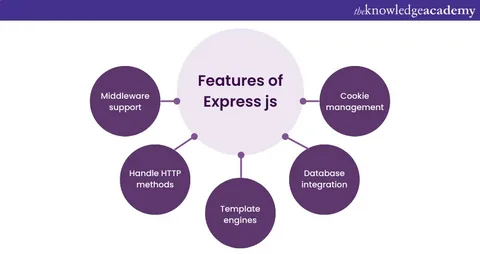
Express.js is the station master for web applications. It orchestrates requests and responses, guiding data to the right places with clarity and speed. To truly appreciate its power, let’s walk through how routing and middleware come together to build efficient APIs.
Routing: Directing the Trains
Routing in Express.js is like assigning platforms to trains. Each route corresponds to a track, ensuring passengers (requests) know exactly where to go.
For example, a /users route might handle requests related to user profiles, while /products deals with inventory. By separating these routes, developers create order in what could otherwise be chaos.
Express makes this intuitive. A simple app.get(‘/users’, …) can fetch data, while app.post(‘/users’, …) can add new records. The power lies in how easily routes can be defined, extended, and maintained, even in large-scale projects.
Beginners who dive into full-stack classes often start with this concept, as routing forms the foundation of every modern API. Understanding it early equips them to build clear, modular systems.
Middleware: The Ticket Inspectors
If routing assigns platforms, middleware functions are the ticket inspectors. They step in along the journey to check credentials, validate baggage, or provide refreshments before passengers reach their destination.
In technical terms, middleware sits between the request and the response. It can authenticate users, log activity, parse incoming data, or handle errors gracefully. Multiple middleware functions can be chained, each performing its task before passing control to the next.
This modularity is what makes Express.js so powerful. Developers can compose reusable building blocks that ensure applications remain both secure and efficient.
Error Handling: Keeping the Tracks Clear
No train system is perfect—sometimes delays or breakdowns occur. In the digital world, this translates to runtime errors or failed requests. Express.js provides structured mechanisms for handling these issues without derailing the entire system.
Error-handling middleware acts like a rapid-response team. It identifies problems, communicates them clearly to users, and ensures that the rest of the system continues to run smoothly. By centralising error handling, developers can avoid repetitive code while maintaining reliability.
Real-World Applications
The elegance of Express.js shines brightest when applied to real-world projects. Consider an e-commerce platform. Routes manage customer accounts, product catalogues, and checkout processes. Middleware ensures users are authenticated before payment, logs every transaction, and catches errors like failed payments.
This combination of routing and middleware enables the creation of scalable and dependable applications. It’s why Express remains a go-to choice for developers building APIs that must handle complex workflows under pressure.
Learners in advanced full-stack classes often build mini-projects with Express—ranging from blogs to booking systems—to see how these concepts come alive in practical scenarios. These projects demonstrate how routing and middleware form the backbone of reliable, user-friendly APIs.
Conclusion
Express.js is more than a framework—it’s the station master ensuring smooth journeys in the bustling station of web applications. Routing assigns tracks, middleware inspects and manages, and error handling clears obstacles along the way. Together, they transform raw requests into seamless digital experiences.
For developers, mastering these fundamentals opens the door to creating APIs that are both elegant and powerful. With Express.js at the helm, the path from routing to middleware becomes less a maze and more a well-planned railway system—efficient, reliable, and built to handle whatever traffic comes its way.
